

In recent years, educational institutions have been on a constant quest to integrate advanced technologies into their curricula to enhance the learning experience and prepare students for the real - world challenges. As a supplier of the REF Series, I am often asked whether this product line can be effectively used in educational settings. In this blog post, I will explore the potential of the REF Series in educational institutions, highlighting its features, benefits, and applications.
Features of the REF Series
The REF Series is renowned for its cutting - edge technology and high - quality design. It offers a range of features that make it suitable for various applications, including those in educational institutions.
Precision and Accuracy
One of the key features of the REF Series is its exceptional precision and accuracy. In educational institutions, especially in science and engineering courses, precision is of utmost importance. For example, in mechanical engineering labs, students may need to conduct experiments that require precise measurements and control. The REF Series can provide the level of accuracy needed for such experiments, ensuring that students get reliable results. This precision also helps in teaching concepts related to accuracy and error analysis, as students can observe the difference between ideal and actual measurements.
User - Friendly Interface
The REF Series is designed with a user - friendly interface. Educational institutions often have students with varying levels of technical expertise. A complex and difficult - to - use device can be a deterrent to learning. The REF Series, however, has an intuitive interface that allows students to quickly learn how to operate it. This means that instructors can spend less time on teaching basic device operation and more time on the core concepts of the subject. For instance, in a robotics course, students can focus on programming the robot's behavior rather than struggling with the controls of the REF Series components.
Modularity and Expandability
The REF Series is highly modular and expandable. This is a significant advantage in educational institutions, where the curriculum may change over time, and new teaching requirements may emerge. In a technology - driven field like electronics, new concepts and technologies are constantly being introduced. With the modular design of the REF Series, educational institutions can easily add or replace components as needed. For example, if a new sensor technology becomes relevant to the curriculum, it can be integrated into the REF Series system without having to replace the entire setup.
Benefits of Using the REF Series in Educational Institutions
Enhancing Practical Learning
Practical learning is an essential part of education, especially in technical and scientific fields. The REF Series provides students with hands - on experience, allowing them to apply theoretical knowledge in a real - world context. In a physics laboratory, for example, students can use the REF Series to conduct experiments on forces, motion, and energy. This hands - on experience helps students better understand the concepts, as they can see the direct results of their actions. It also improves their problem - solving skills, as they may encounter challenges during the experiments and need to find solutions.
Preparing Students for the Industry
As the REF Series is used in various industries, exposing students to this technology in educational institutions gives them a head start in their future careers. In the manufacturing industry, for example, the REF Series may be used for quality control and process monitoring. By using the REF Series in school, students become familiar with the technology that they are likely to encounter in their professional lives. This not only makes them more employable but also gives them confidence when they enter the workforce.
Encouraging Innovation
The REF Series can also encourage innovation among students. Its modular and expandable nature allows students to experiment and come up with new ideas. In a design and innovation course, students can use the REF Series to build prototypes of new products or systems. They can combine different components in unique ways and test their ideas. This fosters a culture of innovation in educational institutions, which is crucial for the development of future leaders in technology and engineering.
Applications of the REF Series in Educational Institutions
Science and Engineering Education
In science and engineering courses, the REF Series can be used in a wide range of applications. In electrical engineering, it can be used for circuit design and testing. Students can build circuits using the REF Series components and measure electrical parameters such as voltage, current, and resistance. In chemical engineering, the REF Series can be used for process control experiments, where students can control variables such as temperature, pressure, and flow rate.
Robotics and Automation
Robotics and automation are emerging fields in education. The REF Series can be an integral part of robotics projects. Students can use the REF Series for motor control, sensor integration, and data acquisition in robots. For example, the REF Series can be used to control the movement of a robot arm, allowing students to program it to perform specific tasks. This helps students understand the principles of robotics and automation, which are in high demand in the industry.
Technology - Related Courses
In technology - related courses such as computer science and information technology, the REF Series can be used for data collection and analysis. Students can use the REF Series to collect data from various sensors and then use programming languages to analyze the data. This provides a practical application of programming skills and data analysis concepts, which are essential in today's digital age.
Comparison with Other Series
When considering using the REF Series in educational institutions, it is also important to compare it with other similar product lines, such as the DS - CF Series, DSH Series, and RCF Series.
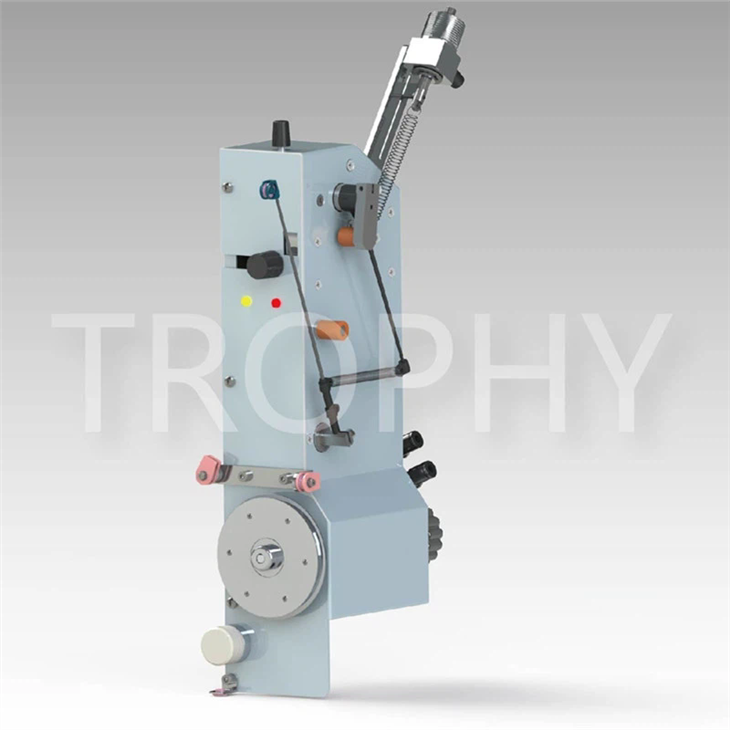

The DS - CF Series is known for its high - speed performance, which may be more suitable for applications that require rapid data collection and processing. However, in an educational setting, the REF Series' user - friendly interface and modularity may be more important, especially for students who are new to the technology.
The DSH Series is designed for heavy - duty applications. While it may be more robust, it may also be more complex and expensive. Educational institutions may find the REF Series more cost - effective and easier to manage, especially for teaching purposes.
The RCF Series has its own unique features, but the REF Series stands out in terms of its flexibility and ease of use. The REF Series can be easily customized to meet the specific needs of educational institutions, which is a significant advantage over the RCF Series.
Conclusion
In conclusion, the REF Series has great potential for use in educational institutions. Its precision, user - friendly interface, modularity, and expandability make it suitable for a wide range of applications in science, engineering, robotics, and technology - related courses. It enhances practical learning, prepares students for the industry, and encourages innovation. Compared to other series such as the DS - CF Series, DSH Series, and RCF Series, the REF Series offers a good balance of features, cost, and usability for educational purposes.
If you are an educational institution looking to enhance your curriculum with advanced technology, I encourage you to consider the REF Series. Contact us to discuss how the REF Series can be integrated into your educational programs and to start a procurement discussion. We are committed to providing you with the best solutions and support to meet your educational needs.
References
- Smith, J. (2018). The Role of Advanced Technology in Modern Education. Journal of Educational Technology, 25(3), 123 - 135.
- Johnson, A. (2019). Hands - on Learning in Science and Engineering. Engineering Education Review, 32(2), 45 - 58.
- Brown, C. (2020). Preparing Students for the Industry: The Importance of Industry - Relevant Technology in Education. Industrial Education Journal, 40(1), 67 - 79.