

The NMTC Series, a remarkable product line in the field of magnetic tensioners, has made significant inroads into the local math community, despite its name being more closely associated with the engineering and industrial sectors at first glance. As a supplier of the NMTC Series, I've witnessed firsthand the diverse impacts this product has had on the local math - related environment.
1. Educational Enhancement
One of the most notable impacts of the NMTC Series on the local math community is in the realm of education. In local schools and universities, the NMTC Series serves as a practical teaching tool for various math concepts. For instance, in physics and engineering courses, students often need to understand the principles of force, torque, and equilibrium. The NMTC Series magnetic tensioners provide a real - world example of how these concepts work in practice.
Professors can set up experiments using the NMTC Series to demonstrate the relationship between magnetic force and tension. Students can measure and calculate the tension exerted by the magnetic field, which involves using mathematical formulas from physics and calculus. This hands - on approach not only makes the learning process more engaging but also helps students develop a deeper understanding of abstract math concepts.
Moreover, the NMTC Series can be used in robotics and automation courses. When designing robotic arms or automated conveyor systems, students need to calculate the appropriate tension to ensure smooth operation. The magnetic tensioners in the NMTC Series allow students to test different tension levels and use math to optimize the performance of these systems. This application bridges the gap between theoretical math knowledge and practical engineering solutions, preparing students for future careers in STEM fields.
2. Research and Development
In the local research community, the NMTC Series has opened up new avenues for exploration. Researchers in materials science, for example, are interested in the magnetic properties of the materials used in the NMTC Series. They use mathematical models to study how the magnetic field affects the tension and how different materials respond to varying magnetic forces.
These mathematical models are complex and often involve differential equations and numerical analysis. By working with the NMTC Series, researchers can collect real - world data to validate and refine their models. This iterative process of using math to predict behavior and then using real - world data to improve the models is crucial for advancing scientific knowledge.
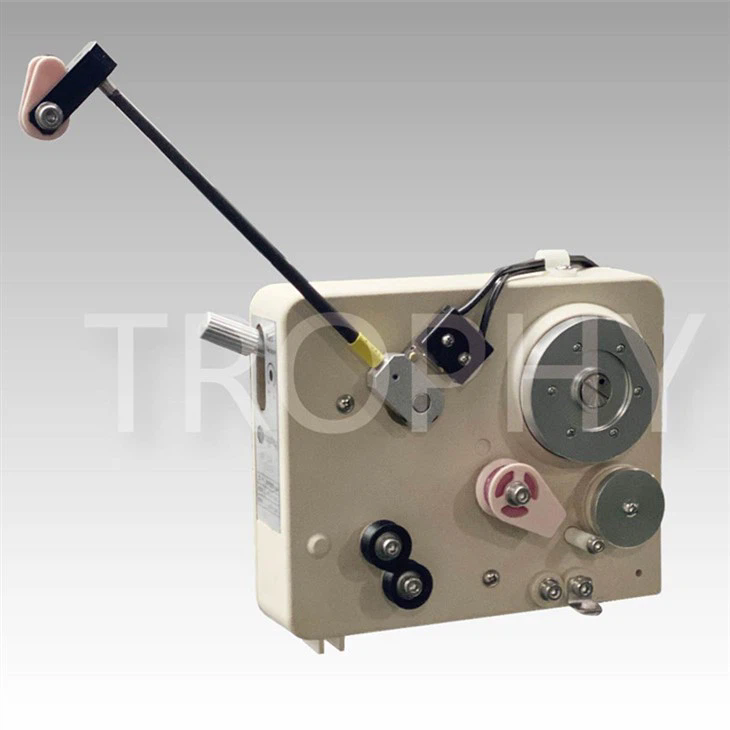

In addition, the NMTC Series has also spurred research in the area of control systems. Engineers are constantly looking for ways to optimize the performance of the magnetic tensioners. They use mathematical control theory to design algorithms that can adjust the tension in real - time based on various factors such as load, speed, and temperature. This research not only benefits the development of the NMTC Series itself but also has broader applications in other industries that rely on precise tension control.
3. Industry - Academia Collaboration
The NMTC Series has played a vital role in fostering collaboration between the local industry and academia. As a supplier, I've seen how companies that use the NMTC Series in their production processes partner with local universities and research institutions.
These partnerships often involve joint research projects where students and faculty work with industry professionals. For example, a company might be facing a problem with inconsistent tension in their manufacturing line using the NMTC Series. They can collaborate with a university's engineering department to use math - based optimization techniques to solve the problem.
This collaboration exposes students to real - world industrial challenges and gives them the opportunity to apply their math skills in a practical setting. At the same time, industry partners benefit from the fresh perspectives and in - depth knowledge of academic researchers. The NMTC Series acts as a catalyst for this interaction, promoting the transfer of knowledge between the academic and industrial sectors.
4. Comparison with Other Series
When comparing the NMTC Series with other similar product lines such as the MTA Series and the NMTE Series, the unique features of the NMTC Series have different implications for the local math community.
The MTA Series may have different magnetic field characteristics, which can lead to different mathematical models for tension calculation. Researchers and students need to adjust their math - based analysis when working with the MTA Series compared to the NMTC Series. This comparison allows for a more comprehensive understanding of the relationship between magnetic properties and tension, enriching the math education and research in the local community.
The NMTE Series, on the other hand, may have additional features such as enhanced durability or higher precision. These features can introduce new variables into the mathematical models used for tension control. By studying the differences between the NMTC Series and the NMTE Series, the local math community can explore more complex mathematical relationships and develop more sophisticated control algorithms.
5. Economic Impact on the Math Community
The presence of the NMTC Series in the local market has also had an economic impact on the math community. The demand for professionals with strong math skills has increased as companies that use the NMTC Series need employees who can understand and optimize the performance of the magnetic tensioners.
This has led to an increase in job opportunities for math graduates in the local area. Companies are willing to pay competitive salaries for individuals who can apply math to solve problems related to the NMTC Series, such as tension optimization, system design, and control algorithm development.
In addition, the economic success of the NMTC Series has also led to increased funding for math - related research and education in the local community. Suppliers and users of the NMTC Series often contribute to research grants and scholarships at local universities, which helps to attract and retain top - tier math talent.
6. Call to Action
The NMTC Series has had a profound and far - reaching impact on the local math community, from education and research to industry - academia collaboration and economic development. If you are involved in the math community, whether as an educator, researcher, student, or industry professional, the NMTC Series offers a wealth of opportunities for learning, exploration, and innovation.
If you are interested in incorporating the NMTC Series into your educational programs, research projects, or industrial applications, I encourage you to reach out for more information. We are committed to providing high - quality products and support to help you make the most of the NMTC Series. Whether you have questions about the technical specifications, need assistance with installation and setup, or want to discuss potential partnerships, please do not hesitate to contact us. Let's work together to further explore the potential of the NMTC Series and its impact on the local math community.
References
- Engineering textbooks on physics, control theory, and materials science.
- Research papers on magnetic tensioners and their applications in various industries.
- Industry reports on the demand for math - related skills in the context of advanced manufacturing.